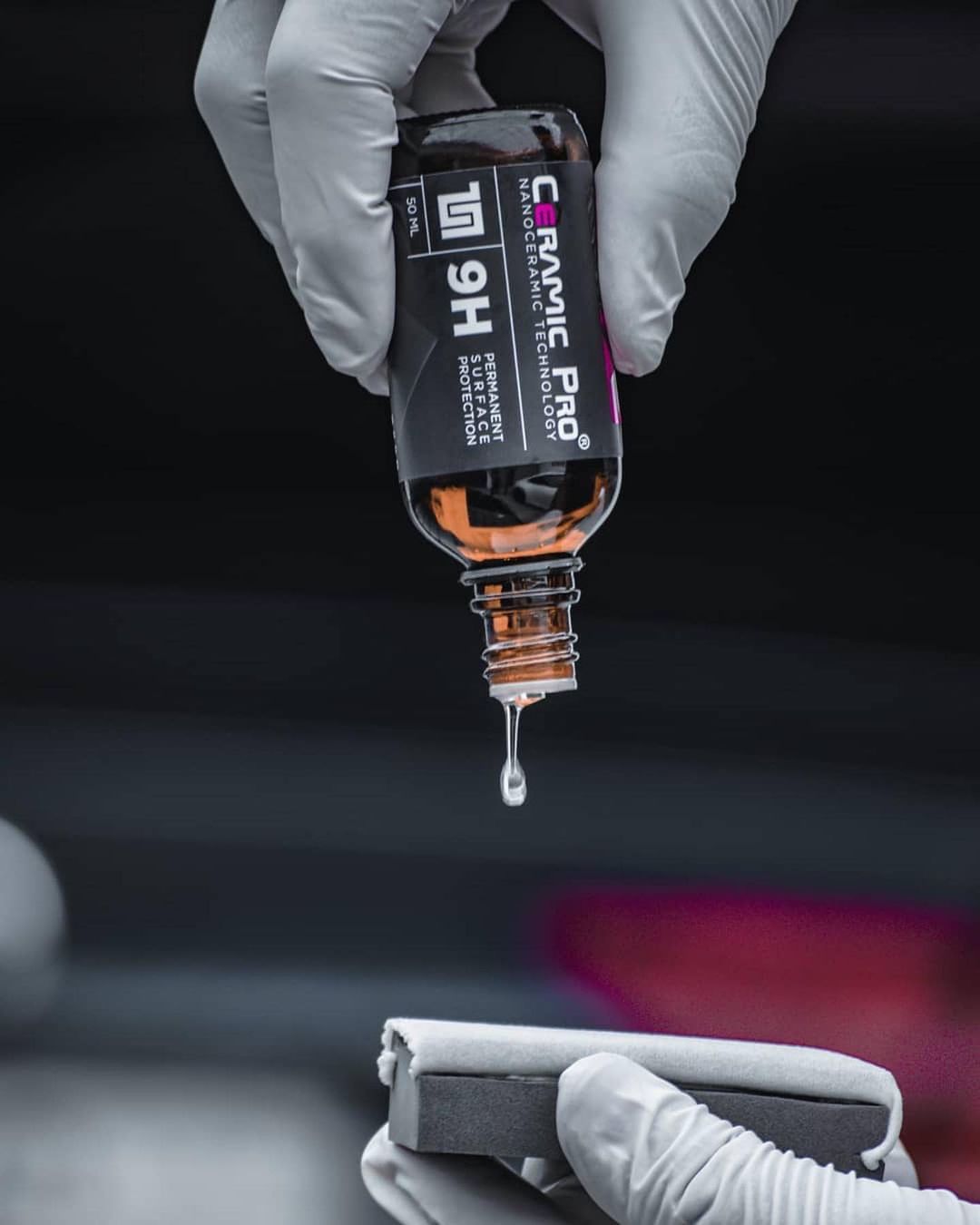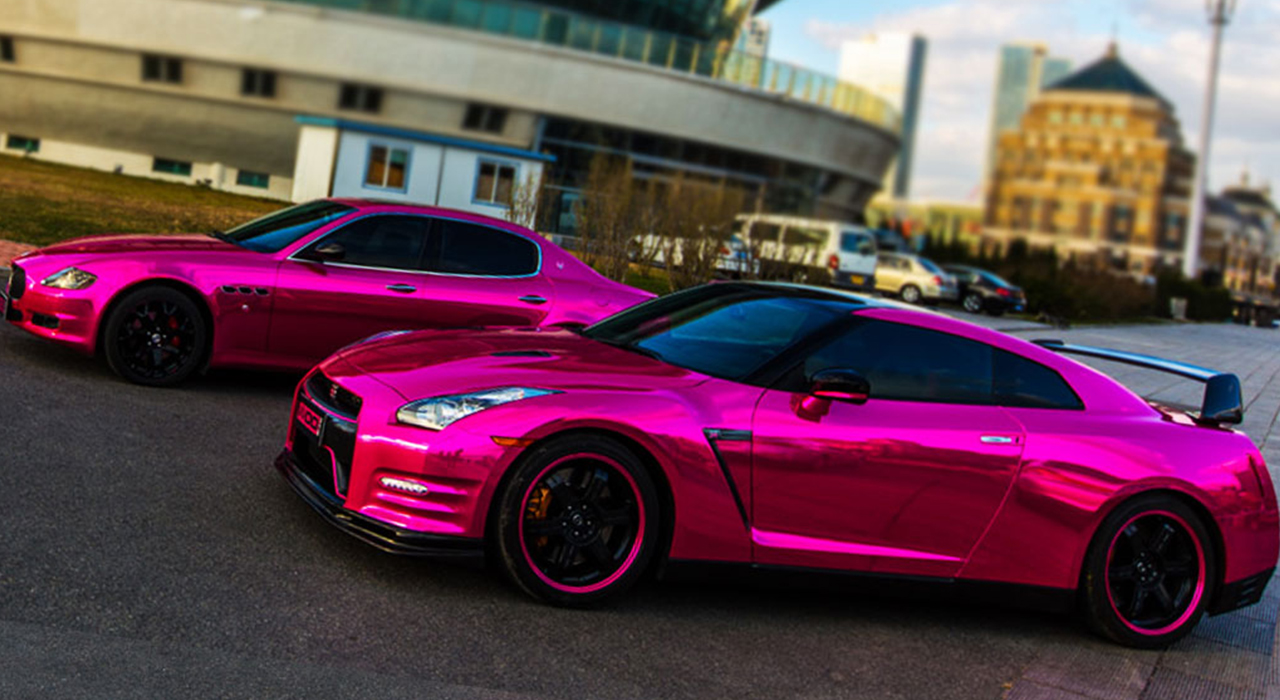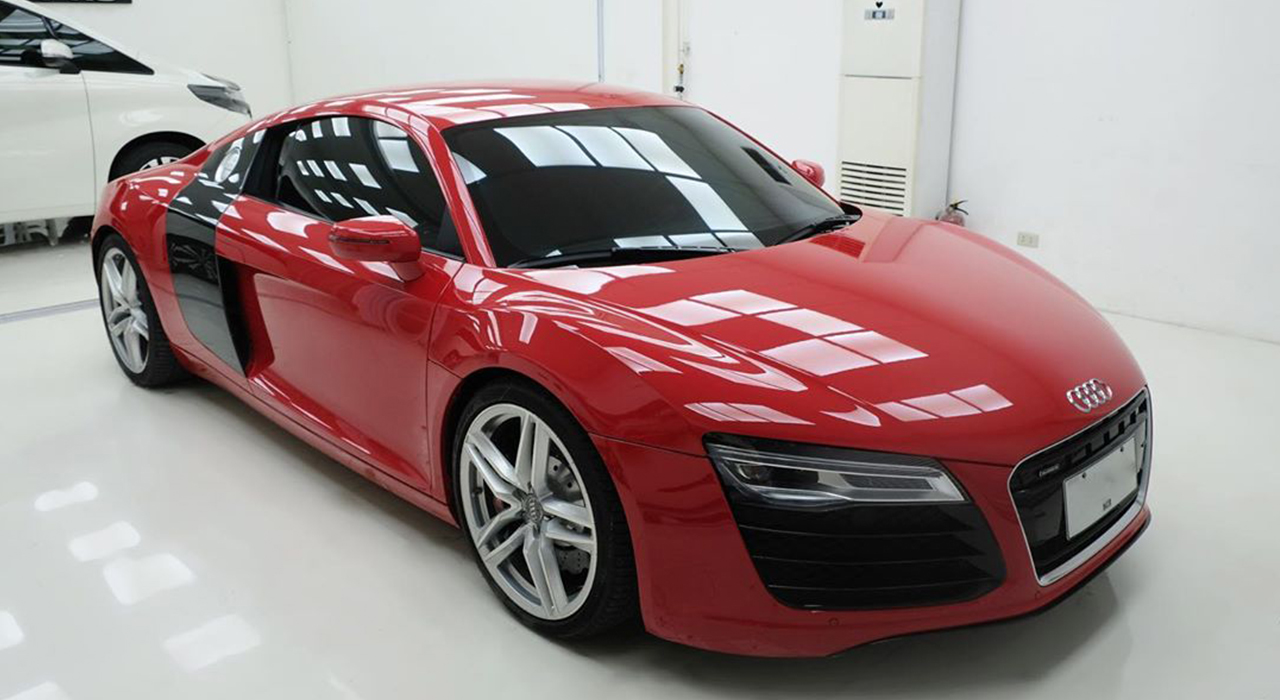
The potency and protection produced by Ceramic Pro 9H is phenomenal (whew – that’s a lot of “P’s”). In the global ceramic coat industry, Ceramic Pro eclipses the competition. While it produces amazing hydrophobic properties, some clients may be confused as to which car washing methods after a ceramic coat has been completed.
Ceramic Pro 9H is a professional-grade SiO2 and TiO2 infused nano ceramic coating that bonds to solid and porous materials ranging from automotive glass to vinyl and paint protection film. However, whether you’ve had one of our excellent installation centers apply this coating, or you’ve selected a DIY ceramic coating, there are some washing techniques that reduce damage, extend lifespan, and allow the coating to shine.
Let’s go over the three recommended car washing methods for ceramic coatings – specifically, those we suggest for Ceramic Pro 9H coatings. But first – watch this cool video from our buddy Adam Cote.https://www.youtube.com/embed/VpzZRJSPUNg?feature=oembed
If you coated an older vehicle that had swirl marks or spider webbing, you likely had a professional detailer complete paint correction to fix those imperfections. But, did you know that the leading root source of this type of damage is improper car washing?
Swirl marks happen when you wash a car with materials (or medium) that can scratch. While special microfiber materials are less likely to cause marring and scratching, they are useless if they are dirty when you wash the vehicle. This happens too frequently when you dip your wash mitt in dirty soapy water.
The two-bucket method of car washing was designed to eliminate this common problem. And believe it or not, a freshly coated vehicle is still prone to swirl marks if you use improper washing techniques.
The first wash method we’re going to go over is the two bucket system using your standard garden hose. You can also use a pressure washer if you’d like. To complete the two-bucket method of car washing, you need to retain the following supplies:
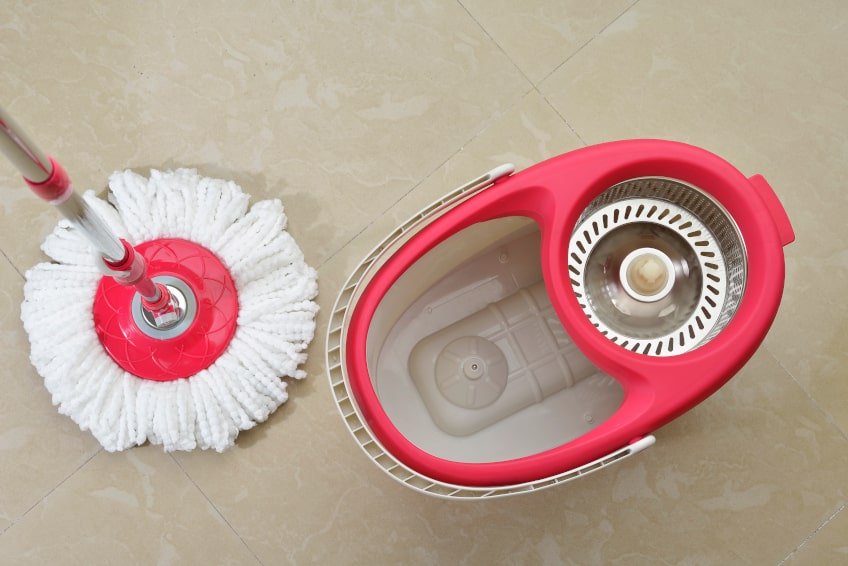
(2) 5-Gallon Wash Buckets – (1) filled with clean water and (1) with car shampoo w/water
(1) Grit Guard – This will be used in your freshwater bucket. For pressure washing use (2) grit guards – one in each bucket.
(1) Wash Mitt / Wash Media of Choice. Our Pink Towel works quite well as a wash ‘cloth’ when using the two-bucket method.
Car Shampoo – It’s recommended to use a pH neutral, high-suds producing car soap that does not contain wax.
You can use the two-bucket method with a regular garden hose and/or attach a foam gun to use as a pre-washing technique. You can also use a high-pressure washer along with a foam cannon to ‘snow foam’ the car for either a touchless wash or pre-wash.
Pre-Rinse the Car: Spray the entire vehicle with water to remove any standing debris, dirt, bird droppings, bug splatters, and more.
Dip your wash media in the soap bucket. Fully saturate your wash mitt or cloth then wash one section or panel of your vehicle in a top to bottom, left to right pattern.
Once you’re done with that panel, dip the wash mitt in the fresh water and agitate it against the grit guard at the bottom of the freshwater bucket. This will remove any dirt on the media.
Wring out any excess water from the wash media and then dip in the soap bucket. Before starting on the next panel, rinse the previous one off with fresh water to reduce soap drying on the surface.
Continue with this process until you’re complete with the car wash. Dry with a high-quality microfiber towel.
*Tip – If you’d like a quick way of completing that fourth step of removing standing water, consider using a wash bucket like this as your freshwater bucket.
It’s got a container you place the media inside, and a foot pedal to spin it. It’ll remove any standing water and save you a ton of time – and put the water back in the bucket. PS – You don’t need to buy the mop with it.
Rinseless Car Washing
If you’re not familiar with the rinseless car washing method, you probably don’t live in Southern California or other areas with strict water restrictions. This includes using a specially formulated rinseless car wash formula, that is mixed with freshwater at a specific ratio (as directed by the soap manufacturer).
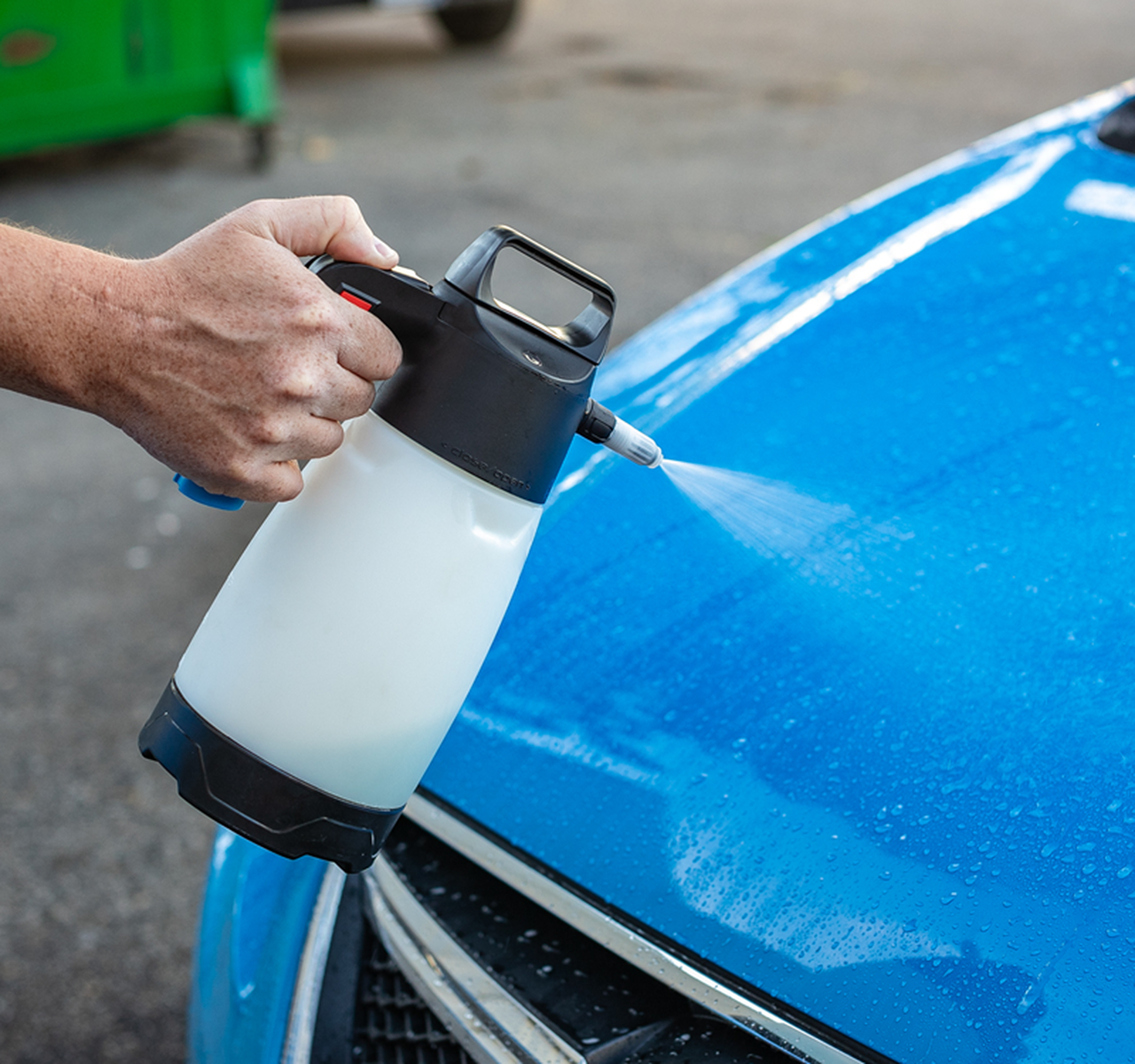
With this method, you basically spray on the rinseless solution (using a large pump sprayer), wipe the wet area with a clean microfiber towel to remove debris, then use a secondary microfiber towel to dry the surface. The video will explain how this process is completed.
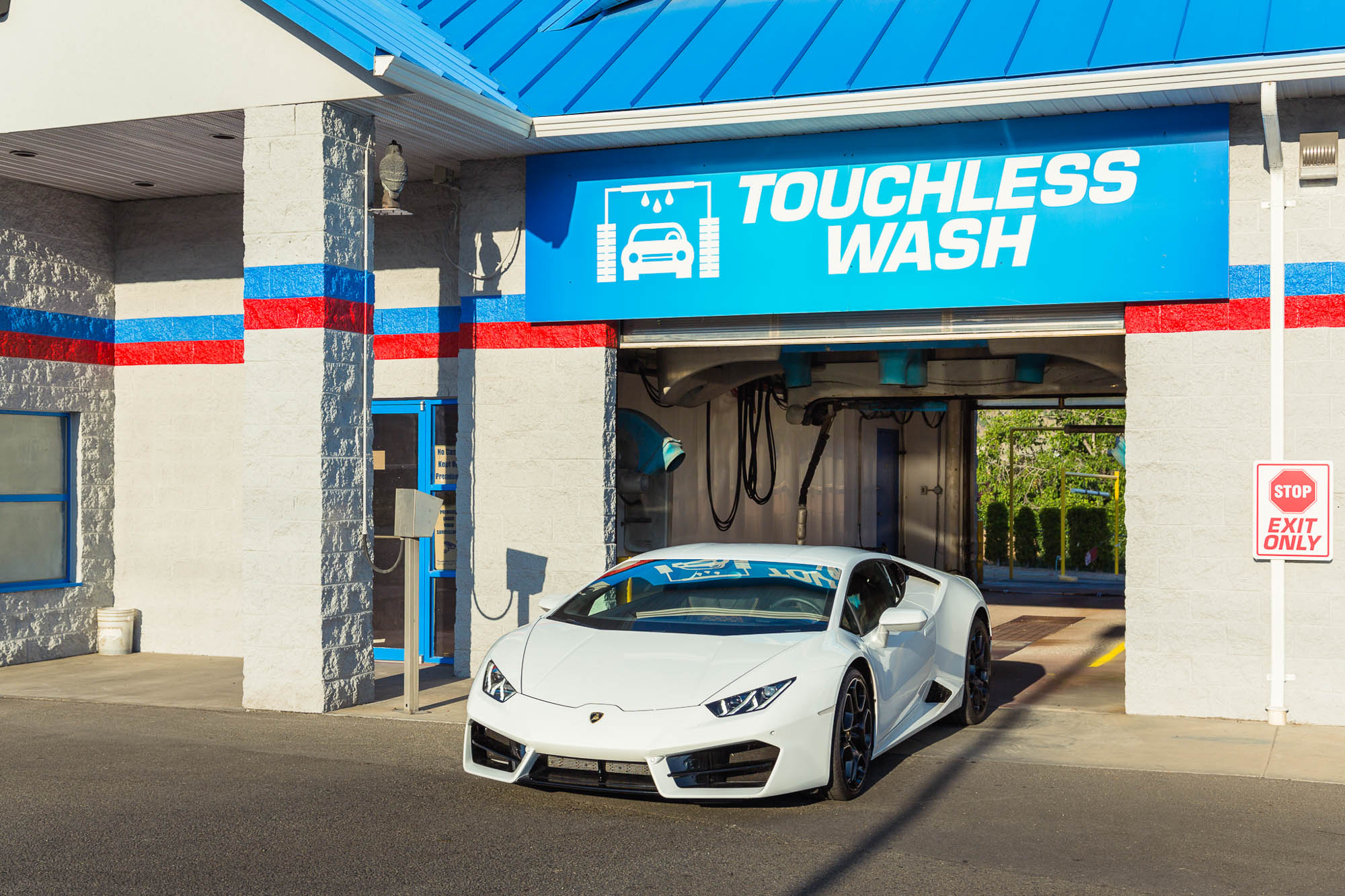
Touchless car washes are basically the manually-operated public car wash that uses high pressure hoses to spray off the vehicle. The other type of touchless wash is one where you drive in, and the machines use high-pressure water and soap to wash the vehicle. The problem with these facilities is the soaps used. They are cheap, generic shampoos that typically are pH high or degreasing agents.
If this is your only option, consider these tips:
Bring Your Own Buckets, Media, and Shampoo: If you visit a touchless car wash where you drive into a wash bay, bring your own supplies. Use the high-pressure washer to pre-rinse and final-rinse the vehicle only. Don’t use their soap, never use the old brush, and by all means – don’t use the spray on wax option.
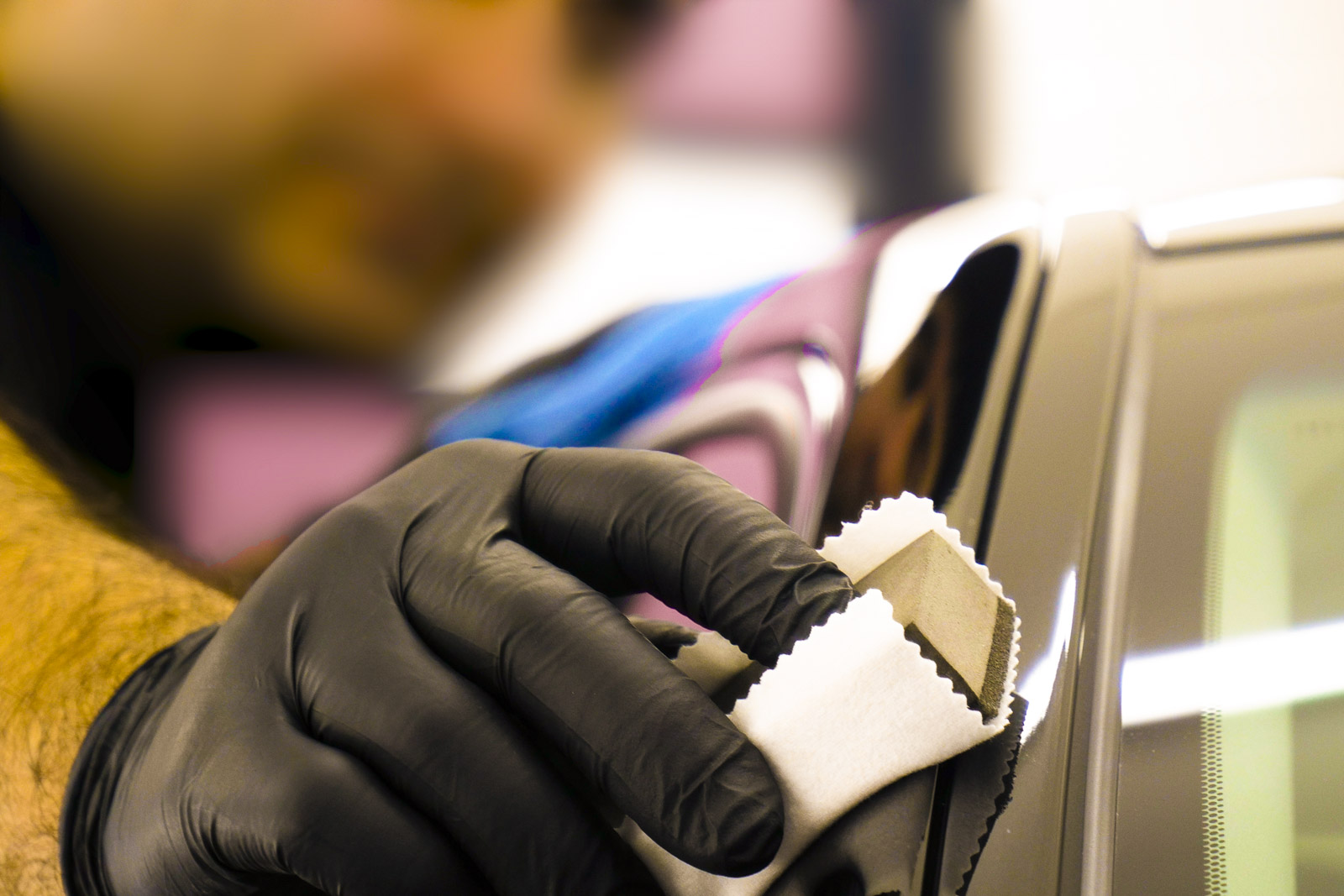
Dry the Vehicle Immediately After Washing: Once you’re complete with the washing, bring your own microfiber drying towels and immediately dry the car before heading home. While Ceramic Pro 9H produces a slippery surface, with exceptional hydrophobic properties, drying the vehicle via acceleration is never a good idea.
Protect Your Ceramic Coated Car with Ceramic Pro CARE
Once your car is clean, smooth, and shiny, and that Ceramic Pro 9H coating is fully cured, the time to protect it is right. Ceramic Pro CARE is a water based, easy to use coating enhancement that is designed to be user friendly that anybody can use to protect their own ceramic coating.
While it’s formulated specifically for Ceramic Pro 9H and our line of ceramic coating solutions, it’s a great ceramic boost spray for DIY ceramic coatings. It can be applied when the water is wet, dry, or used as a quick detail spray if desired.
If you’d like to learn more about Ceramic Pro CARE – or to order your bottle, click the button below.
You should wash your ceramic-coated car every 1–2 weeks to maintain the hydrophobic layer and prevent water spots, especially during monsoon and summer months.
Whether you own a new Vette or completed a frame-off restoration, keeping it clean and free of scratches is every car owner’s objective. In the paint protection world, there are multiple ways of keeping the finish from damage. But, in the end, the two powerhouse contenders are the titanic match-up between paint protection film vs ceramic coatings.
When is the best time to protect my car paint? What products should I use to protect my car’s finish? How often should I wax my car? Or should I toss those cheaper, outdated paint protection products and step up to a PPF or Ceramic Pro coating? There are just a few of the questions we’ll answer in the information below.
First, take some time to watch the video by our buddy Adam Cote to provide a broad overview of the differences between paint protection film vs ceramic coating.
Let’s answer this question with one of our own to you. If you buy a new home, new car, or any major purchase, would you wait a while to purchase insurance or a warranty for the vehicle? Most of us would quickly say, “no, you buy insurance or a warranty at the point of purchase.” And they’d be correct in this case too.
The decision on paint protection is essentially the same concept. The best time to protect your vehicle from exposure to UV rays, bird droppings, bug splatters, rock chips and more is as soon as that new ride becomes yours.
It’s at this point that it’s best to protect your car’s paint job. When the car is new, the paint is clean, free of damage, and is in top condition. This is when you’ll want to apply a paint protection film or ceramic coating – or at least, is the best time to do so.
What Type of Paint Protection Products Are Available?
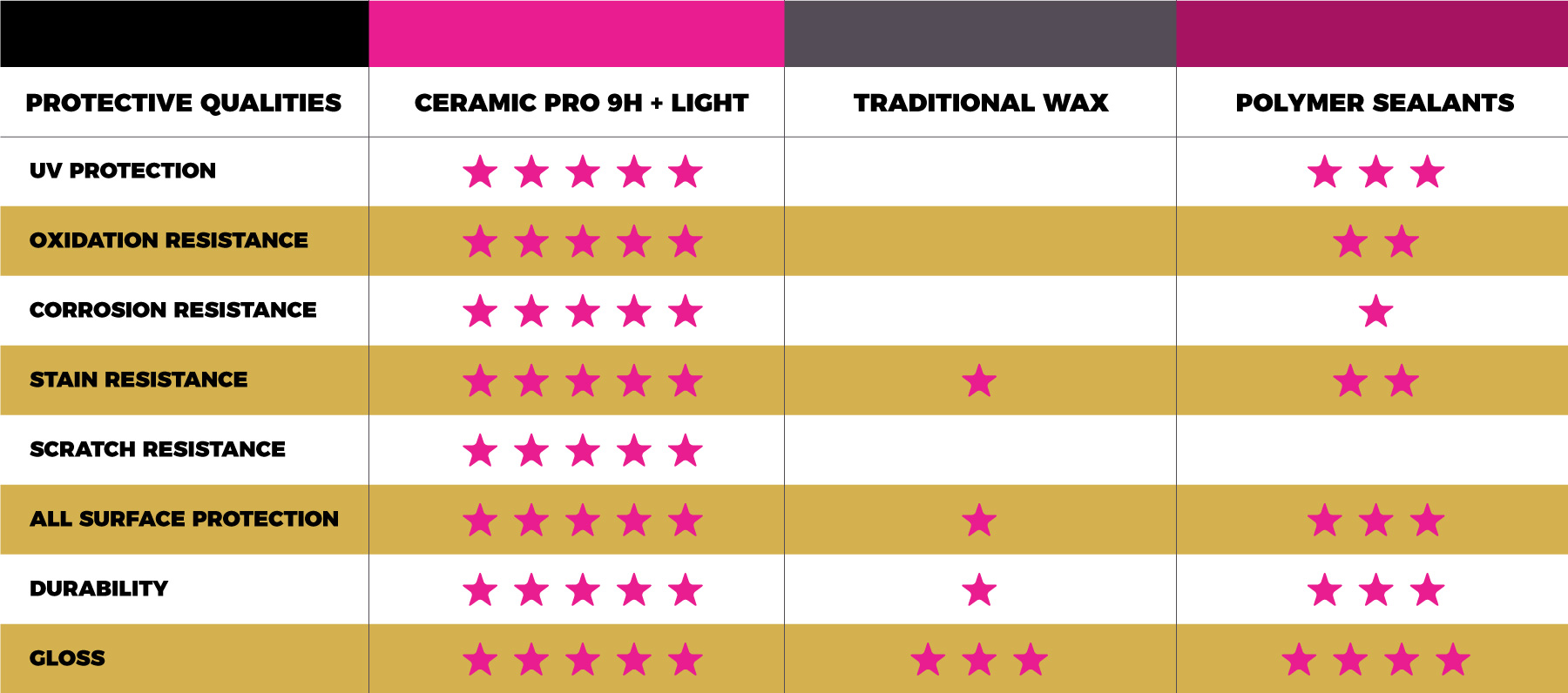
There are several ways of protecting your daily driver or prized collectible. Car wax is the old-school and easy to apply go to solution. It’s basically made up of natural carnauba wax, that is derived from a palm tree from Brazil that protects those big leaves in a tropical rain forest. The problem is they only last a few months.
A paint sealant is a car wax on steroids. It’s a lab-created synthetic wax that provides great UV protection for up to a year in some cases. Then there are new hybrid spray-on formulations, which promote themselves as ceramic coatings, but really are blends of paint sealants, Teflon, and some small percentages of SiO2 or silica dioxide (remember that name – we’ll get to that soon).
However, the top-shelf paint protection products are professional-grade nano ceramic coatings and a paint protection film.
What is a Ceramic Coating?
Think of a ceramic coat as a semi-permanent layer of protection that can be bonded to your paint, glass, chrome, wheels, and even plastic trim. Ceramic coatings are primarily comprised of two main ingredients – Silica Dioxide and Titanium Dioxide. But what they are made of is likely less important to you than what they do.
To simplify, a coating is wiped on to the paint surface and leveled to create a brilliant shine that lasts years not months. It acts by filling the tiny pores of the paint and leveling any microscopic jaggedness of the paint to produce and gloss and slickness not previously available by using wax or sealant technology.
Once applied the paint appears deeper and richer, which produces a better shine. The paint will also have new characteristics, most notably it will be hydrophobic. Hydrophobic essentially means fear of water. A hydrophilic car produces amazing water beading behavior which helps it say cleaner longer and makes keeping it clean extremely easy.
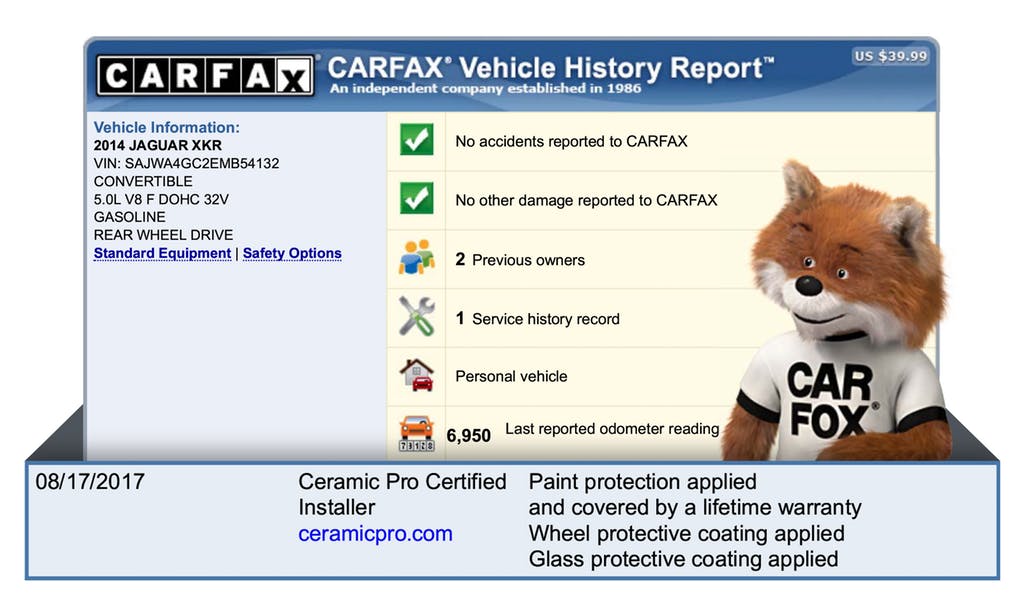
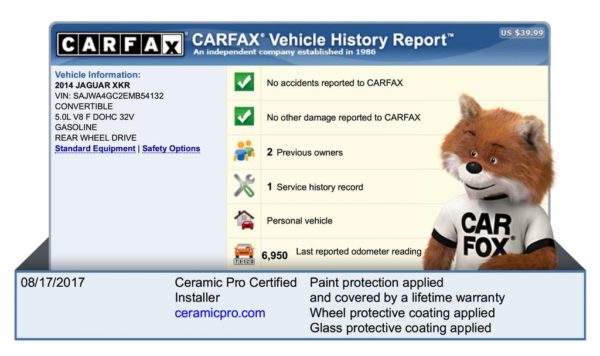
Many coatings if applied by a professional come with a warranty. Ceramic Pro 9H offers CarFax verified warranties that range from 6 months, 2 years, 5 years and even a lifetime warranty. Coating warranties safeguard you and your car paint from environmental issues such as staining on the paint from things like bird droppings, tar, oxidation and more.
Although the coating does improve hardness and thus help prevent minor scratching and marring most do not warranty against scratches. It is important to clarify that there are some DIY ceramic coatings on the market. However, these products vary significantly in product quality, and are rather difficult to prep for and apply correctly.
What is Paint Protection Film or a PPF?
Paint protection film is also known as PPF and Clear Bra. The name clear bra although somewhat comical is a spinoff of a product that had its day in the past. Do you remember cars in the ’90s with a black leather bra on the front? In the past paint protection film was relatively thick by today’s standards which limited its ability to be conformed to intricate areas.
Today’s paint protection film is extremely mailable and can be stretched and conformed to fit extremely complex curves and in most cases, edges and curves can be wrapped and tucked making the film virtually invisible.
The biggest benefits that clear bra has over ceramic coatings are that PPF will prevent damage from flying debris and rocks, and clear bra in most cases has a self-healing top coat so minor scratching and marring will heal over time or by adding heat.
There are several levels of paint protection film or PPF. Some are better at reflecting rocks and other debris, and some that last longer, produce better hydrophobic properties like KAVACA.
Kavaca instant healing paint protection film is PPF with superhydrophobic and non-yellowing properties. It has been developed for automotive industry for paint protection, but due to its outstanding quality can be used in any sphere that requires PPF installation.
What’s Best – Paint Protection Film or Ceramic Coating?
Well, to be honest, if you’re looking for the best solution – both would be the definitive shield of protection. Ceramic Pro 9H nano ceramic coating can be applied on top of a paint protection film like Kavaca. When you combine the two, you receive the rock chip and debris protection attributes of a PPF with the longevity, strength, and hydrophobic properties of a ceramic coating.
https://www.youtube.com/embed/n4Um6WWIEAo?enablejsapi=1&autoplay=0&cc_load_policy=0&cc_lang_pref=&iv_load_policy=1&loop=0&modestbranding=1&rel=0&fs=1&playsinline=0&autohide=2&theme=dark&color=red&controls=1&Plus, when you work with a certified Kavaca and Ceramic Pro 9H auto salons, each can be applied during the same visit, and provide you with up to a lifetime warranty for paint protection. This makes the combination a perfect solution for those looking for the ultimate shield of protection for their vehicle.
If you’d like to explore your opportunities with a high-quality professional-grade ceramic coating or receive a free estimate for Kavaca Paint Protection Film, click the button below.
Ceramic coating is a liquid polymer that adds gloss, UV protection, and makes the surface water-repellent, while PPF is a clear film that provides physical protection against scratches, stone chips, and minor impacts. Ceramic coating enhances appearance and ease of cleaning, whereas PPF offers stronger protection against physical damage.
It’s not every day that a brand defines an industry. Such is the case with Ceramic Pro, a global leader in nanoceramic surface protection technology. Ceramic Pro is a household name in the paint protection world. And we’ve worked hard over the years to provide our valued clients with superior solutions to keep their equipment protected.
Whether it’s our flagship 9H coating, introducing the world’s first instant healing paint protection film (KAVACA), or serving the industrial and marine industry with custom ceramic coats, the Ceramic Pro brand is synonymous with quality in every aspect of our business.
So, let’s introduce you to the company, brand, products, and customer service standards that have helped to elevate a clever business concept to a global leader in surface protection.https://www.youtube.com/embed/2G7Gu9KJEmo?feature=oembed
Since 2010, Ceramic Pro has strived to create revolutionary surface protective products that serve multiple industries, both commercial and consumer. The brand was introduced by Nanoshine Ltd in 2010 and featured a line-up of professional-grade produces serving aerospace, marine, and automotive industries.
Using cutting-edge technology that infused ceramic molecular compounds or nanoceramics suited for plastics, rubber, leather, fabric, glass, paint, alloy, and more. This patented formulation took 10 years of research and development and is continually enhanced and optimized to better serve our customers growing needs.
In 2019, we launched KAVACA – the world’s first Instant Healing Paint Protection Film. This revolutionary PPF is stronger, more durable, easier to apply, and exhibits phenomenal anti-yellowing and hydrophobic properties.
Ceramic Pro Americas is the exclusive distributor of Nanoshine Ltd or Ceramic Pro products in North and South America. Our network of more than 3,000 authorized auto spas and installation centers prepare vehicles, apply our ceramic coats, paint protection film, and other products.
There are many ceramic coats on the market today – but none of them stand up to the quality, effectiveness, and superiority of Ceramic Pro 9H. This is our flagship service offering, a nanoceramic coating that is comprised of SiO2, TiO2, and a proprietary blend of solvents that provide 9H hardness based on the pencil scale of measuring graphite.
Essentially, it’s an invisible shield of protection that can be applied to your car’s paint, carbon fiber, vinyl, paint protection film, glass, wheels, chrome, alloy, fiberglass, and more. Unlike other generic formulations, 9H offers customized solutions for different material types, and consumer or industrial grade applications.
A major reason why this 9H nano coating is an exceptional option for cars is it’s ability to layer on top of each application. Most nanoceramic coatings are engineered for easier application – such as the growing line of DIY ceramic coats on the market.
While they contain SiO2 percentages close to pro-grade options, they reduce the percentage and strength of application solvents. It’s these solvents and nanoceramic technology infused in the Ceramic Pro 9H formulation that allow it to penetrate microscopic imperfections found on a porous surface, cure exceptionally flat on top of the finish, and layer on top of the initial ceramic coat.
With every layer of 9H ceramic coating applied to a vehicle, the protection gains strength, which extends lifespan, and keeps the raw materials underneath in mint condition for years.
To ensure 1 coat bonds with the vehicle’s paint, our certified network of installers will complete paint correction, or ensure the paintwork is 100 percent free of wax, swirl marks, minor scratches, any sealant, and possess a surface tension that ensures a strong bond.
Several nano coatings are a 1 layer application, meaning you place the liquid on an applicator cloth, and apply and buff off. Ceramic Pro 9H includes a proprietary top coat, which amplifies the hydrophobic properties – keeping your vehicle’s paint super slippery, beading water, and reducing the stick-ability of bird droppings, bug splatters, tree sap, brake dust, industrial fallout, and more.
Ceramic Pro 9H serves multiple industries including:
Ceramic Pro 9H forms a permanent bond with the surface of your vehicle and will not wash off or break down. It is a highly-durable protective coating that protects your paint and can be applied in multiple layers. This 9H hardness ceramic coat is:
Scratch Resistance (Above 9H)
Super Hydrophobic Effect
UV Resistance & Weather Benefits
Thermal Resistance (up to 1200°C)
Anti-Graffiti Resistance
Advanced Chemical Resistance
Corrosion & Oxidation Resistant
Produces a High Gloss Finish
Ceramic Pro Top Coat
We mentioned the Top Coat product above. It’s essentially the whipped cream, nuts, and the cherry on top of the Ceramic Pro 9H sundae. It’s a scientifically formulated liquid that amplifies the hydrophobic effect within Ceramic Pro 9H.
It’s the final step in the application of our 9H nano coating, that allows water to bead, reduces bug guts and bird crap from sticking, and keeps the vehicle finish cleaner – for longer periods. While Top Coat can be applied as a stand-alone product, it’s recommended and designed for use with 9H ceramic coating.
Ceramic Pro Rain
Protection for your windshield and side glass is provided through Ceramic Pro Rain, a special blend of SiO2 and TiO2 designed specifically for ultra-smooth, yet porous automotive glass. It’s included with all three Ceramic Pro 9H packages, the Gold, Silver, and Bronze.
This ceramic pro glass shield repels rain, which improves visibility during severe weather. It’s a specially formulated glass coating, which lasts and performs better than all-in-one solutions.
Ceramic Pro Sport
Maintenance is a crucial component that extends the lifespan of any protective coating. This is the task of Ceramic Pro Sport, a spray on solution designed to refresh and enhance the existing coated surface to restore UV resistance and hydrophobic properties. Like Top Coat, it can be used as a standalone coating, that can hold up for six to 12 months.
Ceramic Pro Strong
Our industrial partners require a ceramic coat solution that is stronger and can withstand higher temperature up to 2200-degrees F and exposure to severe elements. Ceramic Pro strong is the industrial solution that’s designed for painted surfaces.
It’s formulated for superior protective qualities vs amplifying the finish. This not only protects metallic products for exposure to harsh elements, but extends the lifespan of the industrial product, which saves corporations to small commercial businesses money and resources.
Ceramic Pro CARE
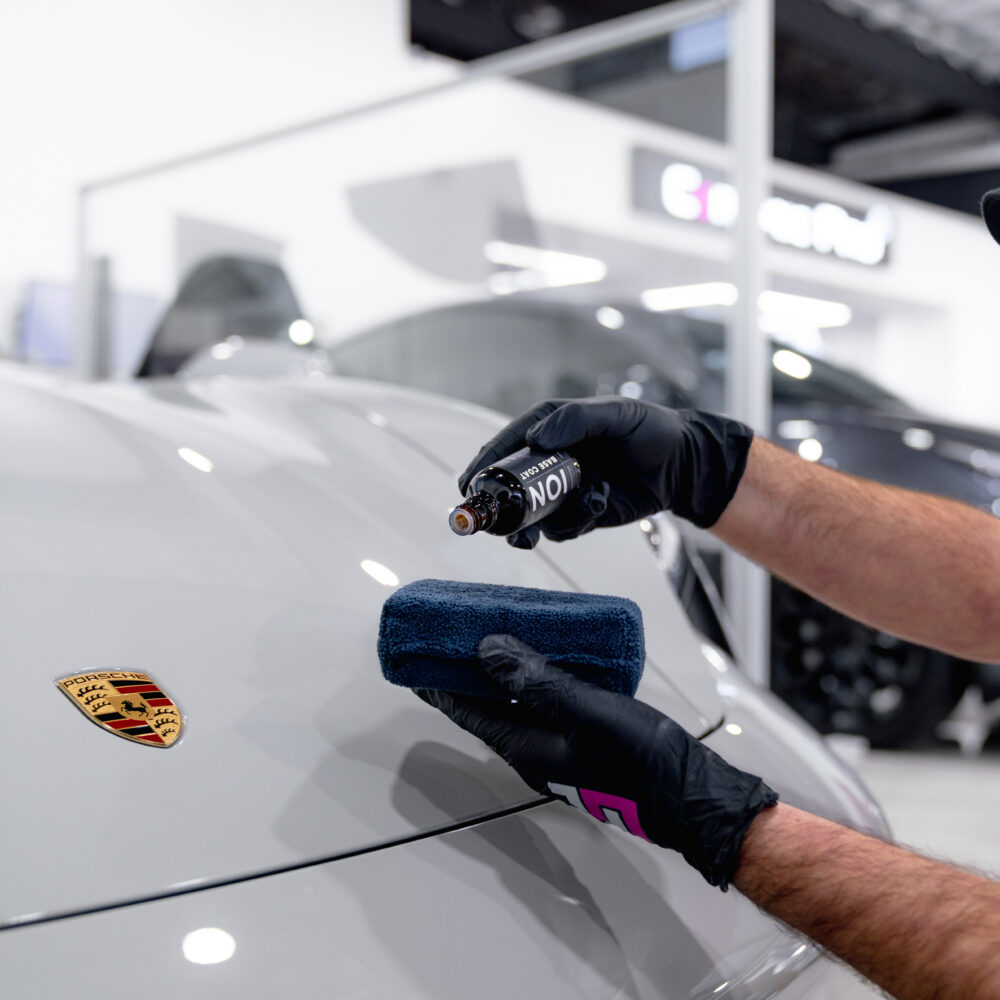
When you’ve invested in a professional ceramic coating for cars, you want to protect that shield of protection. This is the job of Ceramic Pro CARE, a water-activated Ceramic Boost Spray that can be applied to any material using our nano ceramic coatings. It can be used as a drying aid, quick detail spray, or protective enhancement.
What is KAVACA Paint Protection Film?
How up to date are you with translating ancient Sanskrit? Well, for those perhaps not majoring in ancient dead languages, the word KAVACA translates as Armor in the primary liturgical language of Hinduism. And quite frankly, it truly describes the power of this revolutionary PPF.
Kavaca is an instant healing paint protection film. It is superhydrophobic and non-yellowing properties. It has been developed for automotive industry for paint protection, but due to its outstanding quality can be used in any sphere that requires PPF installation.
The our nano coating applied to the Kavaca PPF increases overall surface protection and aids in keeping the film clean and stain-free.
How Do Ceramic Pro Coatings Compare with DIY Ceramic Coatings?
Comparing a professional grade ceramic coat vs a DIY product simply isn’t fair. One is formulated for superior and long-lasting protection, that are only applied by experienced detailers in a controlled environment. The other (DIY coatings) are essentially watered-down coatings that are easier for the average car enthusiast to apply themselves.
Another important difference between Ceramic Pro 9H coatings and DIY coats of ceramic are warranties or guarantees provided to customers. Each package is customized for clients based on the warranty or years of protection they seek for their individual vehicle. This flexibility allows a car owner to choose a package that fits their budget and needs.
For example, let’s say you’ve just purchased a new Tesla, and plan on keeping the vehicle for three years before trading it in for Elon’s latest creation. Our installers offers a Silver Package, that provides you with five years of protection, coatings on the paint clear coat, the windshield and front side windows, along with plastic trim and wheels.
As a consumer segment, DIY coatings do not offer warranties. Some will offer vague ‘expected longevity guarantees’ for a few years but trying to collect on those refunds can be tricky.
A professional nano coating simply lasts longer, provides a better return on investment, and the peace of mind with a documented warranty, exceptional support, and routine inspections to keep the coating strong.
Receive a Free Estimate for Ceramic Pro Products
Improving the customer experience is a crucial objective of our company. As a team, we strive to ensure all current and potential clients are educated on our company, our products, and the technology we use to protect their valued rides.
Our 1 layer 9H ceramic paint coating is exceptional at protecting the exterior of your valued car, truck, SUV, or off-road vehicle. Our ceramic nanoparticles penetrate the smallest pores. It’s a stronger and additional clear coat, that blocks UV rays.
Whether you opt for our Ceramic Pro Gold Package (which offers 4 layers of coating and a lifetime warranty), Ceramic Pro Silver Package, or Ceramic Pro Bronze Package, you’ll keep your cars painted surface protected from dirt, improve UV protection,
If you’re in the market for a Ceramic Pro 9H coating, a self-healing Kavaca paint protection film, or industrial and marine ceramic coatings to protect your assets, we offer a high-quality and affordable solution. Click the button below to receive a fee estimate for our line of Ceramic Pro Products. We look forward to serving you soon.
Ceramic Pro 9H offers stronger protection with its 9H hardness and multi-layer technology, unlike regular coatings that are usually single-layer. It lasts longer, resists scratches, UV rays, and chemicals better, and gives a high-gloss finish with a certified warranty.
Ceramic Pro Top Coat enhances the shine, adds an extra layer of hydrophobic effect, and makes cleaning even easier after applying 9H. It also boosts slickness, helps repel water, dirt, and dust, and extends the overall performance of the 9H coating.
KAVACA: THE MOST ADVANCED AND BEST PAINT PROTECTION FILM
In an industry filled with generic copycats – Kavaca stands alone. The world of paint protection film has been elevated, thanks to the recent launch of Kavaca, a revolutionary instant healing paint protection film, created by the global leaders in paint protection and nano ceramic coating, Ceramic Pro.
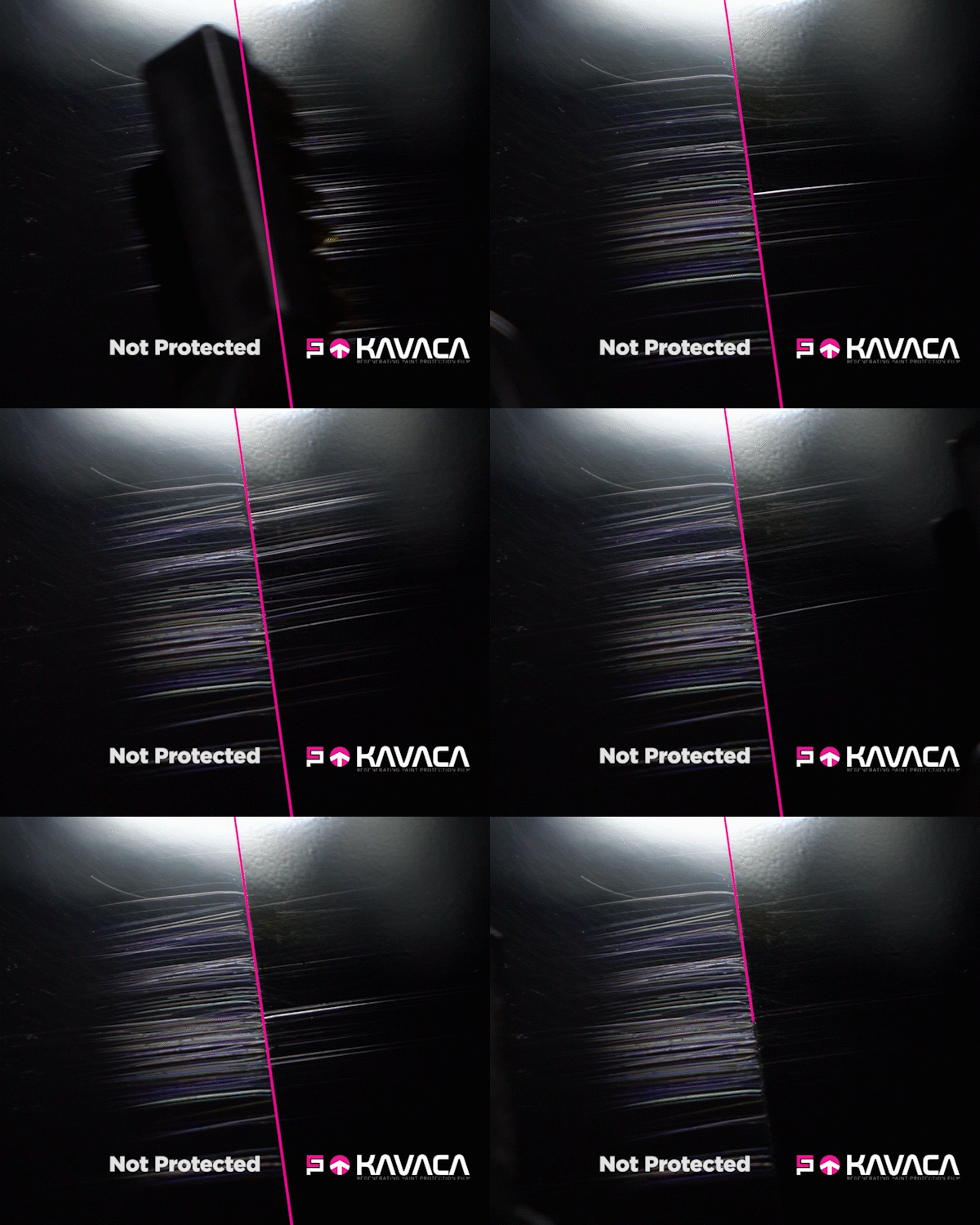
Using nano-technology and a proprietary blend of advanced materials, Kavaca Paint Protection film delivers INSTANT HEALING. This feature quickly repairs minor scratches without the need for heat guns or visits to the installation center. Instant healing is a new surface technology that has never been seen in the paint protection film industry.
Paint Protection Film was initially launched by the 3M corporation for the sole purpose of protecting helicopter rotor blades from damaged during the Vietnam War. Since those early days, the product has been fine-tuned and enhanced for consumer and automotive applications.
The introduction of Kavaca provides enhanced UV protection, while reducing damage to the vehicle’s paint surface from oxidation, corrosion, and rock chips. You can learn more about Paint Protection Film in our blog: “The Truth About Paint Protection Film”
What is Instant Healing Paint Protection Film Technology?
One of the biggest benefits of paint protection film or PPF as it’s also known is the ability to absorb the impact of small rocks, tree branches, and gravel. However, when the topcoat layer of PPF is damaged, applying direct heat can repair minor imperfections. This is typically completed at the same facility where the PPF was installed.
The ability to deflect road debris makes it a better protection solution than a ceramic coating. A PPF is commonly known as a clear bra, that is designed to protect the car’s paint on the front end. Kavaca can be applied to any portion of your vehicle’s paint and other surfaces – including the front bumper, rocker panel, hood, and bumper.
When these sections of the vehicle are protected with protective paint film, paint damage from stone chips, tree sap, bug splatter, other contaminants are significantly reduced. However, when damaged, a product like 3M paint protection film, Xpel paint protection film, or Xpel clear bra will require physical application of heat to ‘self-heal’.
The new Instant Healing technology infused into Kavaca by Ceramic Pro permits these scratches on the surface to heal under one second. This is almost too fast for the naked eye to see but mind-blowing when you see it in person. Combined with these properties: unmatched gloss, clarity, and hydrophobicity, Kavaca is the most advanced and best Paint Protection Film or clear bra film on the market.
Not only does the preexisting top coat and appearance of Kavaca films far surpass every other protective film on the market, but also it has Nanotechnology infused in the adhesive that fills swirls and imperfections in the paint.
What is Kavaca Paint Protection Film and What does Kavaca Mean?
So, what does the name Kavaca mean? Kavaca translates as “Armor” in Sanskrit. Meaning that this paint protection film is the ultimate shield of armor for your vehicle. Kavaca Instant Healing Film is also easier to install than most other films on the market. In the end, to the consumer, this translates to a more secure and longer-lasting installation.
The stretch and elasticity are 50 percent greater than other protection films. This attribute along with the nanotechnology in the adhesive allows the film to be easily positioned while providing the perfect amount of tac/anchor point to cover hard shapes on a vehicle’s painted surface.
The nanotechnology infused adhesive also helps hide certain imperfections on the surface that otherwise would prevalent or be enhanced by other films.
Why is Kavaca the Best Paint Protection Film?
Kavaca PPF is manufactured using state of the art technologies and high-quality raw materials. With the impressive visual appearance, the film acts as a self-healing protective layer preventing the paint from being damaged from abrasion, corrosion, chemicals, and other types of physical damage.
Combined with these properties: unmatched gloss, clarity, and hydrophobicity, Kavaca is the most advanced and visually appealing Paint Protection Film on the market. Many years of experience in the industry of surface protection and extensive research, formulated a perfect PPF to be used along with Ceramic Pro 9H ceramic coatings to maximize the performance of our surface protection systems.
Kavaca offers instant-healing properties without the need to heat the surface. This technology also offers non-yellowing properties, a negative side-effect of several inferior quality paint protection films that can occur due to excessive exposure to UV rays.
Kavaca has been developed for the automotive industry for paint protection, but due to its outstanding quality can be used in any sphere that requires PPF installation.
What are the Key Properties of Kavaca?
A paint protection film like Kavaca simply does not compare on a level playing field with others. The nanotechnology and proprietary Instant Healing properties in Kavaca not only provides a secure bond to your vehicle, but also provides multiple properties that makes it the best PPF on the market.
Industry Leading Gloss
Paint protection film is a translucent material that does not impede the visual appeal of your paint job. However, many of them tend to produce a dull hue. This isn’t the case with Kavaca. This PPF is customized for gloss or matte finishes, amplifying the shine without producing negative appearances.
50% More Stretch Than Leading Competitors
Kavaca’s unique blend of advanced materials allows it to stretch better than other paint protection film products available. This allows the PPF to be fitted to different cars with precision application. The enhanced stretch also helps to improve the instant healing properties and extend longevity.
Reduced Orange Peel
Orange peel is a visual imperfection that makes the paint surface look wrinkled or rough. It’s a common negative attribute of several paint protection films. Kavaca produces reduced orange peel and no glue marks with PPF installation GEL.
Fills Swirls & Imperfections
Any paint protection product is designed to protect or enhance what’s underneath. This means that if the vehicle has minor scratches or swirl marks, paint correction is required – which can cost several hundred dollars extra. Kavaca is infused with nanotechnology that fills these microscopic scratches. This removes the need to complete minor paint correction, which can save money.
Ceramic Pro Hydrophobic Properties
Kavaca is also the most hydrophobic paint protection film. This is due to the advanced top coat that uses similar technology as Ceramic Pro 9H to leave a perfectly flat layer of protection. It allows water to bead off the surface. This also keeps the PPF cleaner, as dirt, pollen, and other light contaminants simply blow off as you drive.
Additionally, Kavaca offers vehicle owners other benefits simply not available with inferior products.
Advanced chemical and corrosion resistance
Instant scratch healing (No heat required)
Resistance to high temperatures
Limited Lifetime Warranty
A protective barrier for high impact areas
Kavaca Warranty & Carfax
Ceramic Pro LLC warrants Kavaca to be free of manufacturer defects for a LIFETIME from the date of purchase. The warranties for Kavaca are synced with Carfax’s database just like Ceramic Pro Coatings.
Kavaca is warrantied when installed on clean coated car panels, to be free of:
Manufacturer Defects
Protection against yellowing from dirt and chemicals Yellowing from UV and at a rate faster than ^Yi 2 per 1000 hours
Bubbling, staining, and cracking or any material failure.
The warranty excludes damage caused by normal wear and tear, misuse, accidents, or misapplication.
This warranty requires annual inspections and becomes a 12-year warranty from the date of the last inspection if an inspection is missed.
Kavaca Regenerating Paint Protection Film offers a level of instant self-healing never seen in the PPF industry. This is the next generation of paint protection film. Kavaca’s self-healing effect is instantaneous.
It does not require a heat source like the paint protection films of the past. The second a surface scratch occurs it immediately begins disappearing right before your eyes. There has never been anything like Kavaca – which removes many of the negative attributes of PPF, making it a longer-lasting, and providing you a better bang for your PPF buck.
The fact that Kavaca is coated with Ceramic Pro makes it even better. The enhanced hydrophobic properties, improved luster, shine, and the ability to customize for gloss or matte paint jobs gives you flexibility to enhance any color. It’s a quality not available with 3M Scotchgard or other car paint protection film solutions.
Kavaca is applied and installed by Ceramic Pro’s network of authorized auto salons and technicians. Each installation is precision fit to your vehicle. If you’d like to learn more about Kavaca – or receive a free estimate for your vehicle, simply click the button below.
Paint protection film is a modern marvel. It’s a thin but exceptionally durable polymer or polyurethane film that is the ultimate layer of protection. Not only does it keep your ride’s clear coat protected against chemicals, UV exposure, acid rain and road debris, but if the vehicle’s paint is impacted by road debris, it can save you thousands of dollars in autobody repair.
There is a lot of information on the interwebs about paint protection film. Some of it is accurate, and others are pure, 100 percent, grade A BS. Search up ceramic coating and you’ll get similar misleading information. So, let’s explore the truth about paint protection film.
In this article – we’ll weed through the myths, rumors, and flat our false information out there, to provide a definitive guide about paint protection film. Does it really protect from light scratches? Can PPF actually self-heal?
We’ll also introduce you to Kavaca instant healing paint protection film – the most advanced PPF on the market today. Additionally, we’ll explain why it makes sense to apply a professional grade ceramic coat on top of that PPF – to create the Ultimate Shield of protection. If you’d like to compare PPF vs ceramic coating, we’ve got a great article you can review after reading this one.
What is Paint Protection Film?
In order to fully appreciate the power of paint protection film, it’s important to explore it’s history. Like many of today’s modern achievements, PPF was developed to solve a problem. During the Vietnam War, the United States Department of Defense was having trouble with rotor blades on several of their helicopters being damaged by shrapnel, trees, and other debris.
The folks at 3M were tasked to create a protective layer that was lightweight, yet incredibly strong. The solution was called helicopter tape or a custom urethane film that was designed for function – not style.
Today’s PPF is far cry from 3M’s helicopter tape. It’s thermoplastic urethane that is transparent, can be colored, even custom textured to enhance gloss or matte paint jobs. It is a clear paint protection film that can be purchased in different grades, thickness, and is applied by highly trained professionals with precision accuracy.
In fact, the present-day paint protection film produces multiple benefits including:
Resistant to acidic corrosion and contaminants (like bug guts and bird droppings)
Protects a painted surface against acid rain, mineral deposits, soft and hard water spots
Reduces oxidation on factory paint caused by UV light
Blocks small rocks, gravel, tree branches and other hard objects from hitting paint surface
A protective film can heal itself if it’s scratched or struck
Lasts for up to 10+ years
What are the Types of Paint Protection Film?
There are a lot of coating for cars on the market today. But paint protection film is arguably the best and most-effective solution. The 3M Corporation is the Godfather of PPF. As explained above, its primary application was to apply a tint to protect lightning-fast spinning helicopter rotor blades from being damaged. Today, more than a dozen different types, brand names, and designs are offered to car enthusiasts.
You’ve probably heard of some of the leading brands including our own Kavaca, 3M Paint Protection Film Pro Series, Llumar, Suntek, and Xpel film. However, it’s commonly misunderstood that the brand of PPF is associated with the type of product.
While sometimes this is the case, the brand is not always related to the material or its proprietary properties. This is one of the myths or misleading PPF truths that can confuse car owners. Some are applied as full wraps while others are partial hood. There are several that offer limited warranties and some that can back up their product with a 10-year warranty.
Let’s provide some clarity here.
What is Clear Bra?
Arguably the most popular ‘name’ in the paint protection films market is clear bra. This is a dual-purpose term – kind of like calling a soda pop a “Coke” – or sealable plastic bags “Zip-Lock”. Clear Bra is a brand name for a specific type of protective film. But, it’s also a specific brand as well.
It’s applied to the front end of the vehicle, covering the front bumper, car’s paint, grille, headlights, splitter, and even the front portion of the hood and front fenders. The term “bra” is used to describe the location of the application.
Back in the day, it was common for car enthusiasts to apply a leather or hard vinyl-based material over the front of the vehicle – to serve the same purpose – protect the automotive paint.
You can see an example of this in the image above. The “Clear Bra” removed the colored and thick material and was one of the first types of PPF available to car owners.
What is the Difference Between Vinyl and PPF?
If you’ve read previous articles offering PPF buying tips, you might have read about vinyl or car wraps. Another confusion that occurs is understanding the difference between paint protection film or PPF and vinyl – or also called a vinyl wrap.
Essentially, PPF is a thicker, stronger, yet lightweight material. It provides stain resistance, protection from stone chips, light scratches, bug splatter, swirl marks, and other paint damage.
Vinyl is heavier, thinner, and typically colored. It can also be decorated with graphics. Here is a practical example. This image below a great example of a vinyl wrap. It’s a branded vinyl that is applied to the original paint of a specific vehicle. It replicates a “sticker” – but also provides protection for the paint underneath. The car is David Douthit’s Quartermaster Nostalgia Jet Funny Car. The entire car is painted, but the bottom of the car is vinyl wrapped. What’s really cool is that the words on the car light-up when the car is on.
Explaining the Science Behind Paint Protection Film
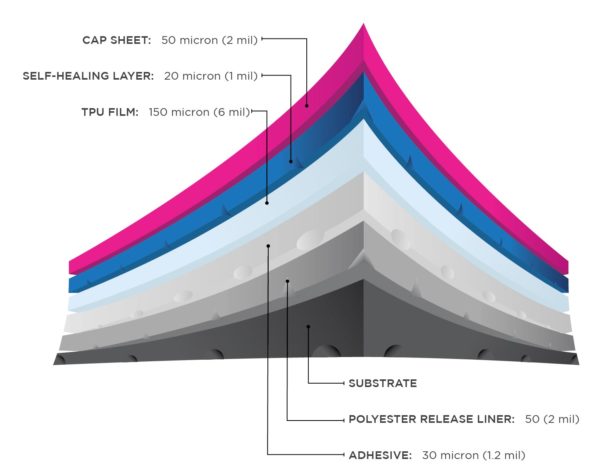
OK – let’s get technical. Most automotive paint protection film are based on the same physical construction. It’s broken down into four individual layers:
Polyester Release Liner: This is the bottom layer of PPF. It measures about 3.0 mils (or 0.076mm) in thickness. Once it’s removed, it exposes the material that provides the bond to the vehicle surface.
Acrylic Adhesive: The next layer up is the acrylic adhesive. It’ is a bit thinner – measuring 1.6 mils (or 0.040mm). This provides the durability of adhesion.
Polyurethane: The bulk of PPF is polyurethane. This provides the depth and strength of the paint protection film and measures 6.0 mils (0.152mm).
Clearcoat: The final layer is clearcoat. It measures 0.5 mils (0.0132mm) and acts as the surface layer of the PPF. It is also what helps a ceramic coating like Ceramic Pro to bond on top of the PPF. Some self-healing PPF’s are topped with an elastomeric polymer that helps the material maintain its natural shape once it has been stretched or applied.
How Can a PPF Self Heal?
Let’s be 100% clear – not all products in the paint protection film market have self-healing properties. The ones that possess this attribute are comprised of Elastomeric polymers. This introduces today’s word of the day – “Elastomeric”. So, what does this mean?
Well, the word itself is an adjective which describes the nature or action of materials that are elastomers. Elastomers are cross-linked polymers that are loosely attached. It’s a synthetic or natural rubber that can return to its natural state when the source of the damage is removed.
When a high-quality paint protection film is comprised of this material, the application of heat (either natural by the sun or a heat gun) will repair damage like scratches or even minor tears caused by an impact from a rock. If the PPF is repaired in this method, the term ‘self-healing’ is a bit inaccurate, as it requires an outside physical action.
Is There a True Self-Healing PPF?
There are a lot of people that flat out wonder how does PPF work. Well, as we explained above, the science infused in these advanced materials helps to block common road debris from damaging the vehicle’s surface. If it’s hit hard enough, the PPF may in fact scratch. This is where the self-healing properties of paint protection film comes into practical application.
However, if a product is truly self-healing, it should possess the technology and ability to fix itself without an outside source. A new, revolutionary paint protection film called Kavaca – by Ceramic Pro is a genuine Instant Healing PPF.
Watch the video below to learn how Kavaca works.
How is Paint Protection Film Installed?
Like any other paint protection solution, correct prep work, installation, and aftercare is crucial to the success or failure of a PPF. Ceramic Pro is known for their ceramic coating products, but they also manufacturer a superior clear bra material that is called Kavaca. Installing a clear bra pattern or a full coverage that
The installation process is unique for each manufacturer, but the process follows these general steps:
Step One – Prep Work for Paint Protection Film Installation
For a PPF to protect, it’s got to be bonded to a surface. This becomes possible when that surface is clean, free of debris, and any damage. However, since a paint protection film is transparent, the condition of the paint or surface underneath makes a huge difference in the brilliance of the finished product.
What is a Decontamination Car Wash? A decontaminating car wash is typically the first step of PPF prep. It involves the use of a wax-stripping car shampoo that acts as a detergent, which breaks down the oils in wax, factory paint sealant, and allows them to be washed away.
If you have a ceramic coating applied to your entire vehicle, the professional detailer that installs clear bra film will simply complete a maintenance car wash. If there are minor scratches due to rock chips – or if you have an older paint job, the auto detailing company might want to repair those issues in the next step.
What is Paint Correction? Once the surface has been cleaned and stripped of initial debris, the installer will inspect the condition of the paint. If it is faded, aged, has spider-webbing or swirl marks, or shows signs of damage, the installer will recommend paint correction to the client.
This involves polishing or using a cutting compound to remove minor scratches or imperfections in the paint. The final result is a perfectly smooth surface that allows the PPF to bond but also allows the brilliance of the finish to shine.
Final Wipe Panel Wipe Down: Using a proprietary blend of chemical agents, the authorized and certified PPF installer will remove any contaminants or excess polishes or oils on the surface.
Step Two – Pre-Cutting the Material
There are two types of methods for applying the PPF. Most professional installers of PPF use a plotter or a machine that pre-cuts the material in smaller, custom-fit sections – like a fender or door edges.
This helps to reduce waste, save the client and installer money, and of course – resources. It also is crucial to expediting the PPF installation and making it fit better in smaller sections like door jams, headlights, and grilles.
The second method is using bulk film. It’s basically used when an installer does not have a plotter – and tends to result in excess material, more time, and less precision or accuracy of the installation.
When used by an experienced installer, these problems can be mitigated. In fact, some are so good that they can hand-cut to fit rocker panels, side mirrors, the hood, deck lid, spoilers, and more.
Step Three – Fitting
To ensure accuracy, the installer will pre-fit the car protection film. The paint protection film market is filled with multiple brands and types of installation types – like a clear bra that only goes on the front of the vehicle. Fitting the clear bra to the paintwork is a tedious and precision process that verifies that the material will fit each section and connect or blend with each other with reduced gaps.
While this does add some additional time to the complete process, it’s worth it in the end – as it will protect the paintwork and other areas of the vehicle against rock chips or a light scratch, which can be fixed easily with self healing PPF.
Step Four – Spraying the Fitting Solution
The activator which permits the clear bra or PPF to bond to the surface is called a fitting solution. When sprayed to the painted surface and on top of the PPF, it activates the adhesive – which is a glue basically and bonds tightly to the surface.
Again, each brand of PPF has recommended fitting solution properties, some can range from distilled water to chemically-activated agents. This helps it bond to a car’s paintwork, helping to block UV rays, oxidation, corrosion, and eventually the development of rust.
Step Five – Application and Final Fit
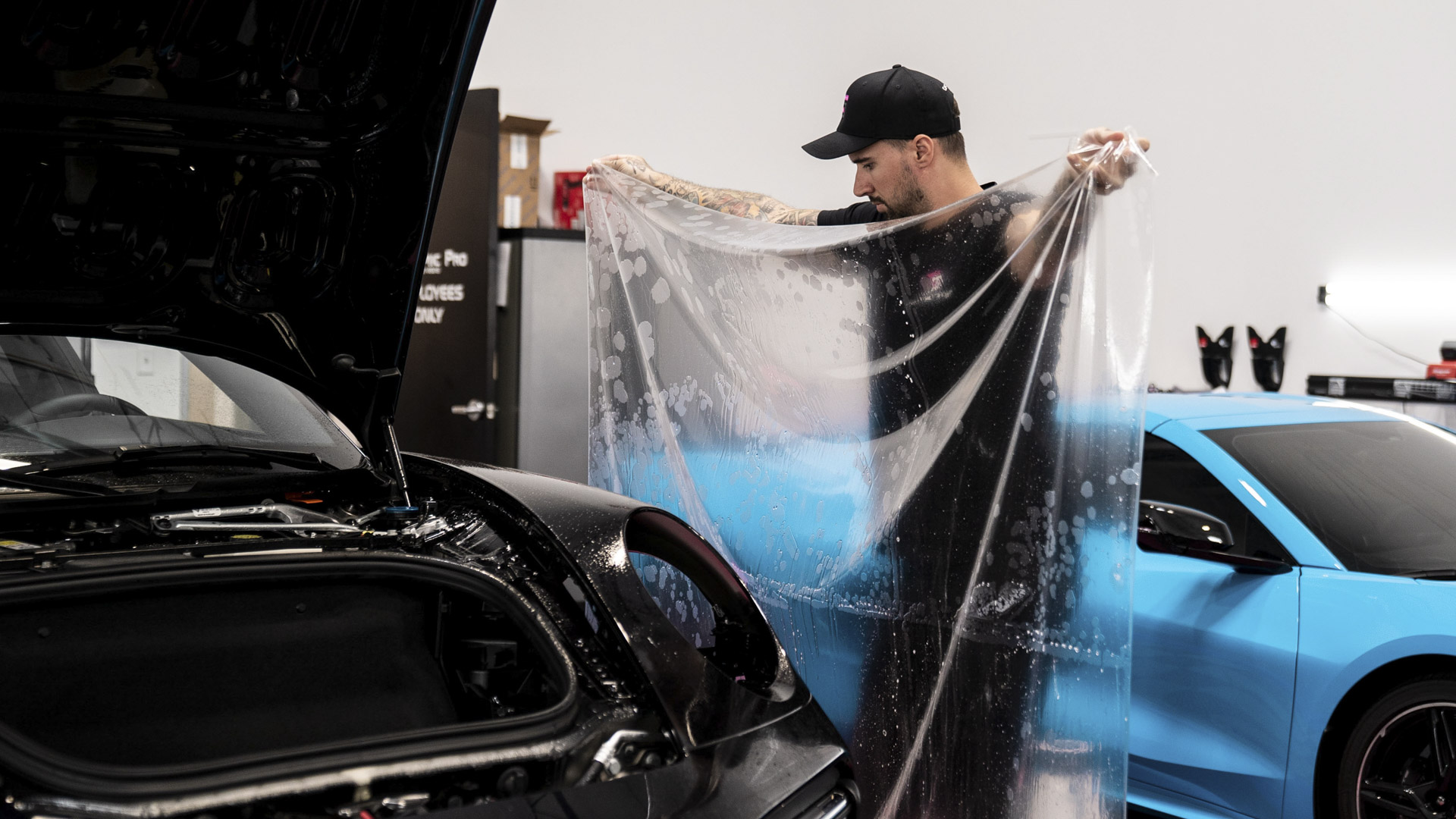
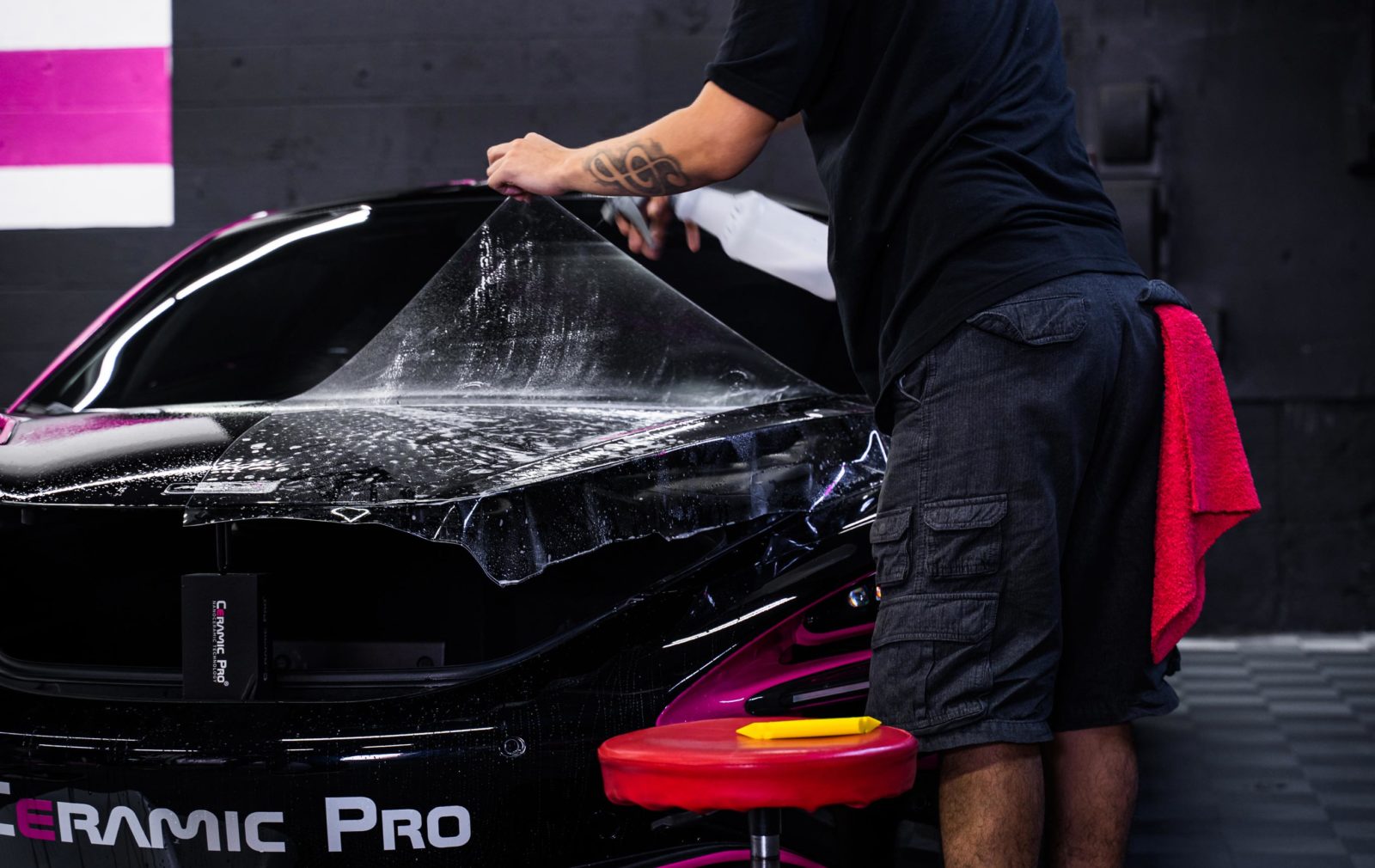
This is the step that makes the magic occur. The experienced PPF installer will carefully glide the PPF into perfect fit. It’s a process of fitting, spraying solution, moving around, squeegee of bubbles, and more. When it’s in the exact position, the installer will use a squeegee to remove creases or bubbles from the PPF. Once the PPF clear bra has bonded to the paint surface, it provides exceptional sealant or surface protection on the car’s exterior – especially against a normal scratch, bird dropping, a rock chip
Step Six – Drying
The final step of the clear bra or PPF installation is drying. This can be done a few different ways – either by time or using a specific drying procedure. Most professional PPF’s are heat-activated by use of a heat gun or even placed into a heat chamber. The process essentially activates the ‘glue’ and restricts the material to create an incredibly tight fit.
How Long Does Paint Protection Film Last?
A professionally prepped and applied paint protection film has an expected longevity of five to 10 years. However, like any other paint protection solution, the durability of the PPF is impacted by several variables.
The Prep Work
Like we stated above, the condition of the surface prior to applying the PPF is a major factor that impacts longevity of automobile protection. If the surface is clean, free of scratches, and any contaminants, the adhesive will bond better and ensure a tighter fit.
The Application
Having a certified paint protection film installer complete the entire process is another surefire way to extend the lifespan of your PPF. The material and supplies they use is just as crucial.
Most PPF brands, like Ceramic Pro PPF Kavaca partner with the best professional detailers and installers, have advanced training and certification process, to ensure their clients receive the best possible service. Working with the right PPF dealer will reduce air bubbles in the finished product, which makes the PPF look seamless.
Inferior top coat materials are common in cheap products, which leads to yellowing or potential for a stain to occur. It also provides reduced protection against bug acids.
Environmental Factors
While a PPF is intended to protect the surface from exposure to UV light, acid rain, bird droppings and other environmental factors, too much can have negative consequences.
To reduce this potential, applying a professional-grade nano ceramic coating on top of the PPF can provide an additional layer of protection – extending the life span to the lifetime of the vehicle in some cases.
What are the Pros and Cons of Paint Protection Film?
We’re not here to blow smoke – but to provide facts. And the fact remains that paint protection film is not for everyone. While it’s a great way to reduce scratching, rock chips, and other surface damage, it comes with some pros and cons to consider.
Pros of Paint Protection Film
Strongest material to protect against rock chips and paint damage
Incredible healing properties – like Wolverine – if you want Deadpool healing, an Instant Healing PPF like Kavaca is perfect
Prevents paint scratching, marring, or swirl marks
Longest lasting paint protection solution on the market – up to 10 years or more when combined with a professional-grade nano coating
Better engineering and technology than in years past – no more yellowing or reduced hydrophobic properties
Cons of Paint Protection Film
Many grades of PPF. Not all products or brands are same – so do your research to choose the best solution for your application.
Difference in Self Healing Property: There are some PPF’s that offer the ultimate paint protection film properties – by instantly healing scratches. But most are ‘self-healing’ that require some heat or physical repair techniques to remove the surface scratches.
Not a DIY solution. A paint protection film is a professional-grade clear film product that should be applied by experts. While there are DIY clear bra products, results simply don’t match professional-grade PPF
It’s an investment. There is no way to spin this – PPF is not cheap. It’s an investment in the quality and condition of your vehicle. It’s always best to work with a certified PPF dealership or authorized detailer.
Expanding the Life and Effectiveness of PPF
We mentioned this briefly above, but the best way to protect and enhance your paint protection film is to have a professional-grade nano-ceramic coating applied on top.
A Ceramic Pro solution is comprised of silicon dioxide or SiO2, Titanium Dioxide or TiO2, and a group of proprietary polymers and ingredients that form an exceptionally strong layer of protection on top of the PPF.
It’s basically a liquid form of quartz or glass, that penetrates the microscopic valley’s found in the PPF top layer, then hardens to create an ultra-smooth and flat surface. A ceramic coating can protect your headlight covers, glass, carbon fiber, and vinyl wrap. When it’s applied, it leaves a hydrophobic surface, which makes water, dust, debris, tree sap, bug splatters, and more less likely to stick. This is known as producing a super hydrophobic effect.
Benefits of Applying Ceramic Coating on PPF
When you apply a nano ceramic coating that is engineered to bond with the exact material of the PPF you choose, it can provide multiple benefits.
Increased Depth and Shine: When a nano ceramic coating cures, they transform into a thin layer of glass that is as strong as quartz. This amplifies the brilliance of paint found under the PPF, which increases the depth of the paint below – whether it’s gloss or matte finish.
Improves Hydrophobic Properties: Hydrophobic is a fancy term to describe a surface ability to repel water. However, beyond producing optically cool water shedding and beading, it also helps to reduce the potential of dirt, pollen, and other contaminants from sticking. For example, if you’re an enemy of pigeons – and they drop a deuce on your ride, a ceramic coated PPF makes it simple to remove their waste.
Extended Lifespan: The strength and durability of a professional-grade Ceramic Pro coating is far superior to even the best DIY nano coating. Professional grade coatings are comprised of more than 90 percent SiO2 – which is about 10% more than the leading self-applied coating. This results in a stronger and longer-lasting coating and a PPF that still maintains self-healing properties.
What’s the Verdict on PPF?
Just like there are different grades of car wax, ceramic coatings, and paint sealants, there are just as many different paint protection film products on the market. If you’re considering the investment into a high-quality PPF, consider the following.
Complete Due Diligence: Before spending money on any major purchase, make sure to research the product you’re thinking about buying. This is especially true with paint protection film and those who apply it.
Does the PPF Work as Advertised: As an industry, PPF is less susceptible to gimmicks and marketing buzz-terms. However, it’s important to verify through third-party reviews, and looking into the technology infused in PPF to ensure it does what the manufacturer claims.
Is it a True Instant Healing PPF: Arguably the best attribute of paint protection film is it’s ability to heal when it is lightly scratched or damaged. If you need to take your ride to the installer each time you have a minor scratch, this is going to add time – and often more cost to your overall expense.
What is the Best PPF in 2020?
By investing in an Instant Healing PPF like Ceramic Pro’s Kavaca, you’ll receive an honest and genuine instant healing solution. It’s the only PPF on the market today infused with nano-technology that does not require professional help to self-heal. It’s truly the best PPF, offers you superior protection, and can hold up for 10 years or longer.
KEY PROPERTIES:
Kavaca Instant Healing Film
Your ride is your passion. If you’re looking for the best paint protection film on the market today, click the button below to receive a customized free estimate.